Fen Koleji


“We believe that the foundations of our children's education are laid in preschool.”

As science preschools, we create a warm and safe environment for our students and develop a program that contributes to all areas of their development. Based on the philosophy that “the best way to learn is through play,” our program fully supports our students’ visual, auditory, emotional, logical, rhythmic, verbal, and interactive development. One of the points we are sensitive about when preparing the education program is our approach to education. Our system is based on the latest technology, which develops children's imagination, productivity, self-esteem, and questioning skills. We integrate this into our system by taking into account our students' learning speed and skills. In routine activities, we provide opportunities for our students to question and define themselves in order to make their learning permanent. Throughout the year, we encourage our students to research and question through project-based topics, enabling them to develop themselves.

It is carried out using real objects and models with clear and intriguing narration. Learning is facilitated by creating or completing stories related to the topic, dramatization, and conveying the topic using the 5W1H method. It is an activity that supports the development of our students' language and social skills.

Mathazone is an activity that aims to develop students' skills in questioning, analyzing, problem solving, using time effectively, understanding, and thinking. It is made effective by involving students in the process through storytelling techniques. It is an activity that focuses on numerical activities in order for our students to gain cognitive skills.

It is an activity that develops creativity and imagination, enables self-expression in different ways, awareness of one's surroundings, learning through play, and artistic thinking skills. Students are given the opportunity to develop their psychomotor skills using different materials.

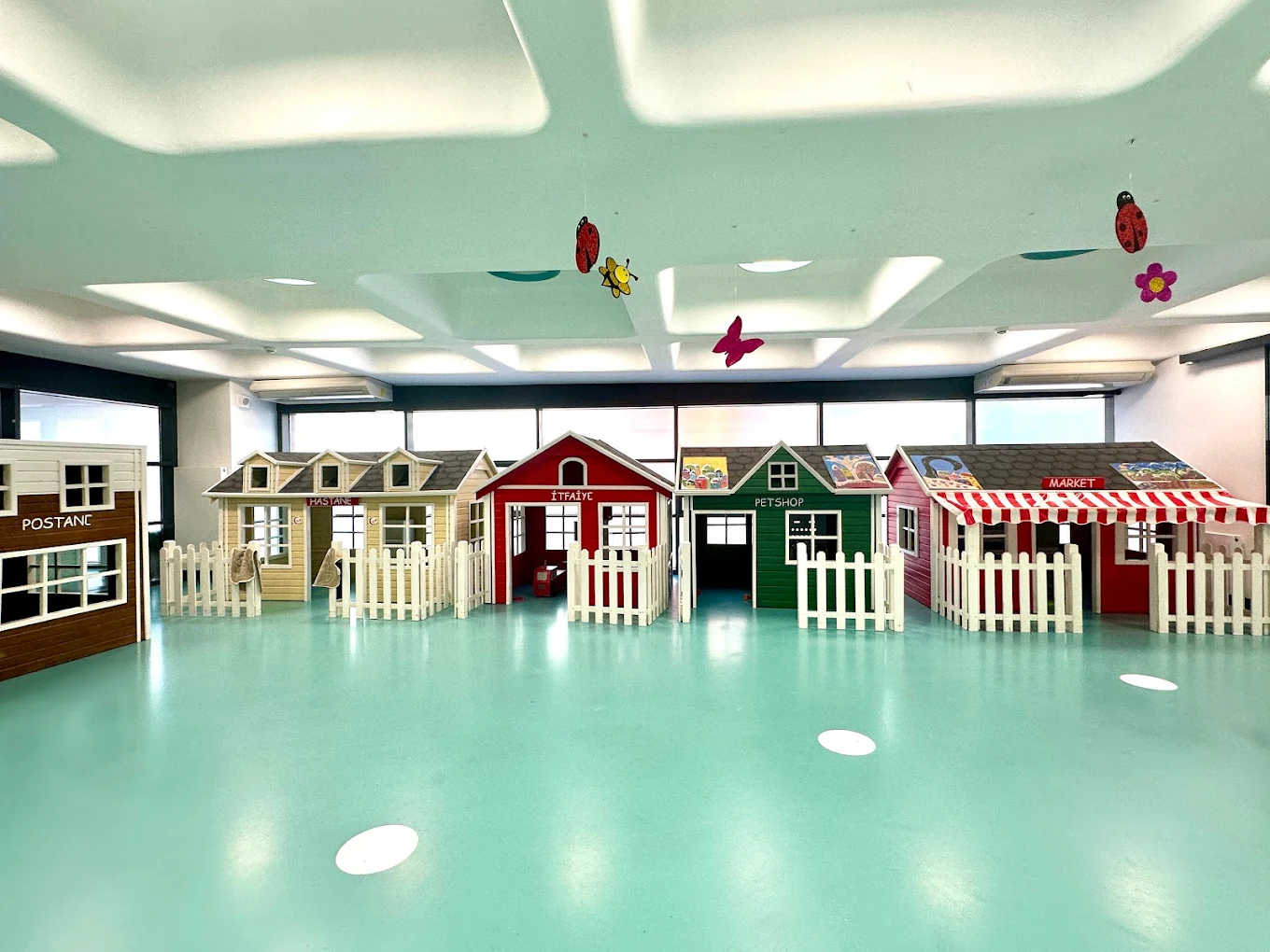
What is money? How is it used? What are the different currencies? These questions are clarified. Our students learn about currencies and how to read them. At the end of the year, they learn through a practical shopping project.

Skills such as visual perception, quick thinking, reasoning, making connections, and memory work are developed. Beads, number sticks, memory cards, and various educational materials are used. Opportunities are provided to develop logical thinking.

It basically helps you develop body percussion, rhythm skills, self-expression through music, synchronization, and awareness of sound. It's done using musical instruments, sound systems, and body language. It helps you develop rhythmic thinking skills.

This activity helps students develop their drawing skills by gradually drawing (copying) a picture related to the topic. It helps develop visual thinking skills.

It provides students with experiences such as establishing cause-and-effect relationships, discovering and learning, and conducting scientific research with various materials in a laboratory environment. It ensures the development of scientific thinking skills.

During the work, original thinking is encouraged by allowing for ideas such as replacing or rearranging different things.

Our students transition to reading and writing preparation activities through fun games and physical movements involving drawing exercises. In addition, students' skills in holding books, reading visually from left to right and top to bottom, and holding pencils correctly are also supported. Using interactive and real objects, activities are conducted to understand and feel sounds, recognize the direction of sounds, identify sounds, read syllables, and read sentences.

Object: Students bring an object of their choice to school and engage in storytelling activities to develop their creativity, sentence structure, vocabulary, and ability to establish connections between objects.


Who Did What?: Each month, students learn about the discoveries of a scientist and their life. This encourages them to engage in research.


Project: Students are encouraged to conduct research on a monthly topic and give presentations using various visual aids.


Values Education – Social Life Skills: This activity aims to instill values such as love, respect, and tolerance. Students internalize these values through storytelling, topic presentations, and project creation. A corner related to the topic is set up in the students' learning centers.

We provide our students with support in a digital environment through an online education package that we believe is appropriate for their level. Our homework system, which we believe our students can do without getting bored on weekends, makes it easier for them to learn by repeating the work.

WhatsApp